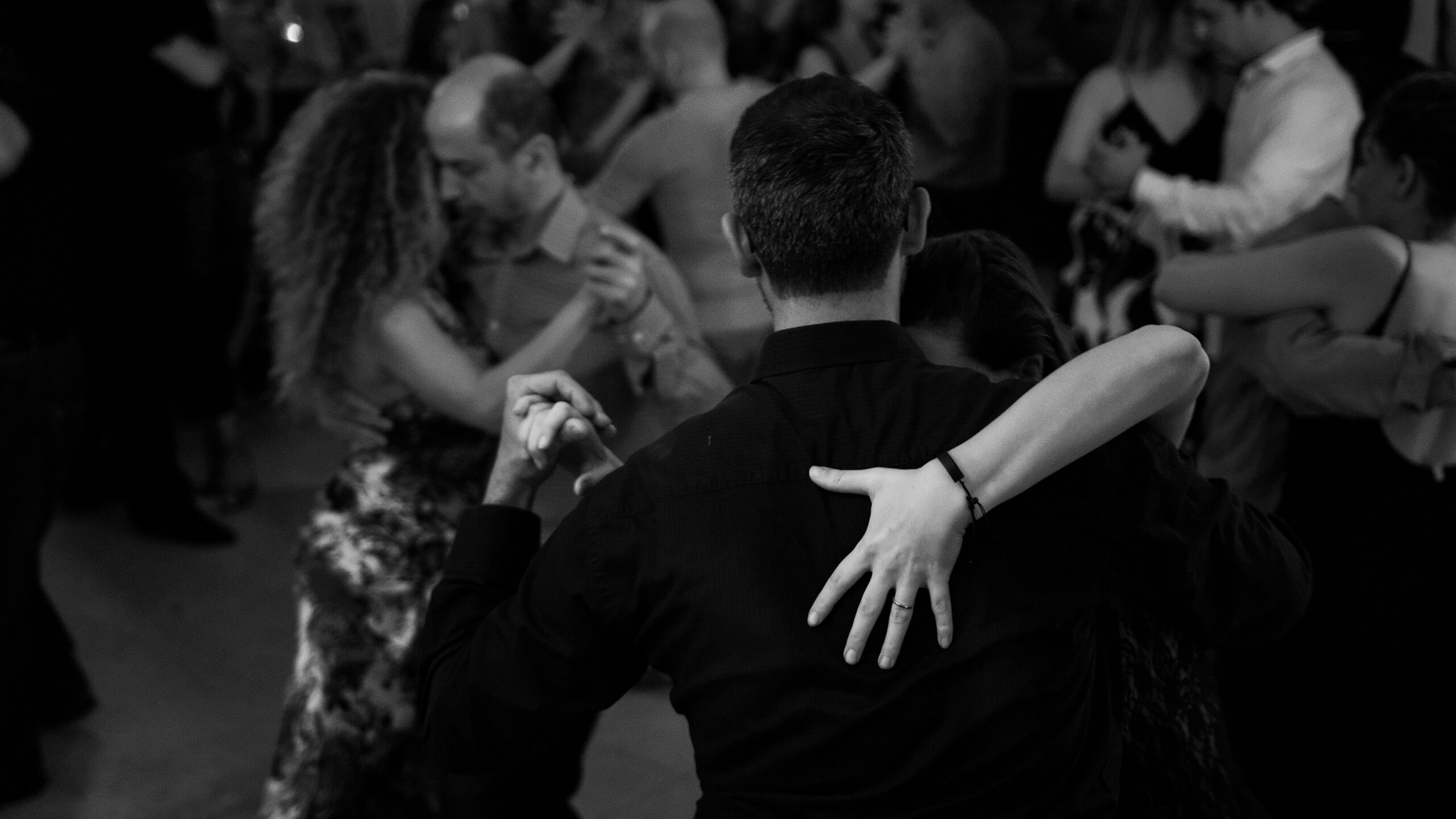
Most people think leading means control
and following means compliance.
That belief alone is what makes partner dancing feel tense.
True partnership doesn’t come from pushing, pulling, or anticipating.
It comes from shared rhythm.
Why Force Appears
Force shows up when rhythm hasn’t settled yet.
When timing is unclear:
-
Leaders push to “make it happen”
-
Followers guess to stay ahead
-
Both feel responsible for keeping things together
This isn’t a failure of skill.
It’s a failure of coordination.
Without rhythm, partners compensate with effort.
And effort feels like pressure.
What Leading Actually Is
Leading is not telling someone what to do.
Leading is signaling when movement begins.
That signal doesn’t need strength.
It needs clarity.
When rhythm is stable:
-
Weight transfers speak for themselves
-
Direction becomes obvious
-
Small movements carry meaning
A good lead doesn’t force motion.
They invite it—through timing.
What Following Actually Is
Following is not waiting.
And it’s not guessing.
Following is listening for rhythm in motion.
When rhythm is present:
-
The body responds naturally
-
Balance stays intact
-
Confidence grows without instruction
A good follow isn’t passive.
They’re actively attuned—to timing, energy, and flow.
Rhythm Is the Missing Middle
Most people try to jump straight from steps to partnership.
But something essential lives in between:
rhythm.
Rhythm is the shared reference point that allows two people to:
-
Move independently
-
Yet stay connected
-
Without needing force
When both partners feel the same pulse:
-
Leading becomes lighter
-
Following becomes clearer
-
Movement feels conversational instead of corrective
Why Rhythm First Changes Everything
In the Rhythm First approach:
-
Partners establish timing before technique
-
Sound and movement settle the nervous system
-
Connection forms before complexity
Instead of asking:
“Am I leading correctly?”
Or:
“Am I following well enough?”
Partners begin to feel:
“We’re moving together.”
That feeling is unmistakable.
And once it’s there, force becomes unnecessary.
Partnership Is Coordination, Not Control
Great partner dancing isn’t about domination or obedience.
It’s about:
-
Mutual awareness
-
Shared timing
-
Responsive energy
When rhythm organizes the partnership:
-
Trust replaces tension
-
Direction replaces pressure
-
Joy replaces effort
Leading and following stop being roles.
They become a conversation.
This Applies Beyond Dance
The same pattern appears everywhere:
-
In relationships
-
In teamwork
-
In communication
When rhythm is missing, people push.
When rhythm is present, things flow.
Partner dancing simply makes this visible.
Begin Where Rhythm Lives
You don’t need stronger leads.
You don’t need better follows.
You need rhythm.
Once rhythm is shared,
leading and following take care of themselves.