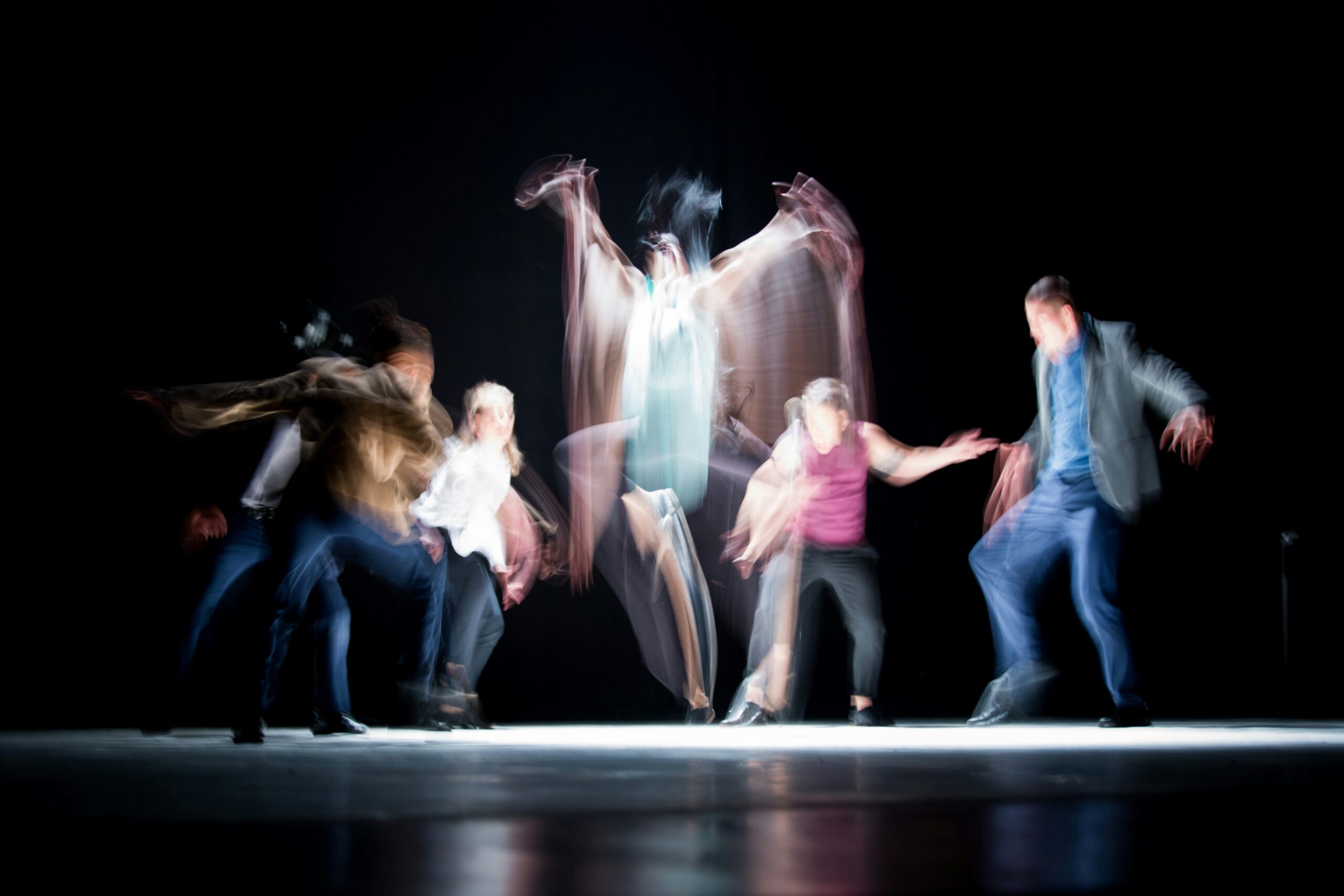
Some understanding cannot be explained into existence.
It has to be felt.
We live in a culture that privileges explanation. If something isn’t working, we assume we need better language, clearer instructions, or more information. We try to think our way into clarity.
But there are limits to what words can do.
Movement reveals what the mind often overlooks.
It shows us:
- Where tension is hiding
- Where timing breaks down
- Where coordination collapses under pressure
Not as theory—but as experience.
The Body Doesn’t Lie
The mind is excellent at rationalizing.
The body is not.
When we move, especially in rhythm, patterns become visible immediately. You can see hesitation. You can feel rushing. You can sense where effort is replacing alignment.
No explanation is required.
This is why movement—across cultures and throughout history—has always been used to teach things that language struggles to convey:
- Cooperation
- Trust
- Leadership
- Adaptation
- Timing
- Relationship
Before people wrote about these things, they danced them.
They practiced them through shared rhythm, repetition, and embodied timing.
Rhythm Quietly Reorganizes the System
In rhythmic movement, something subtle happens.
Thinking softens.
The nervous system settles.
Attention moves from analysis to presence.
The body begins to coordinate itself without force.
This is not accidental. Rhythm gives the nervous system a structure it can trust. When rhythm is stable, the body doesn’t have to brace or anticipate. It can respond.
That response is honest.
It tells the truth about where we are—not where we think we should be.
This Is Not About Performance
Movement is often misunderstood as something you do well or do poorly. But performance is not the point here.
Coherence is.
When rhythm organizes the body:
- Movements become simpler
- Effort decreases
- Confidence emerges naturally
- Awareness expands without instruction
You don’t have to “try” to be present.
Presence becomes the default.
This is why people often feel calmer after moving—even if nothing has been explained, solved, or discussed.
Something has reorganized beneath the surface.
Why Words Can’t Do This Alone
Words are abstract.
Movement is concrete.
You can talk about timing endlessly.
You can explain coordination perfectly.
You can describe trust in precise language.
But until the body experiences alignment, those ideas remain theoretical.
Movement collapses the distance between knowing and doing.
It doesn’t argue.
It demonstrates.
And rhythm—simple, repeatable, shared rhythm—is what makes that demonstration accessible to everyone, regardless of background, age, or experience.
Returning to Alignment
Movement doesn’t fix problems.
It restores coordination.
And when coordination returns, many problems dissolve on their own.
This is why rhythmic movement remains one of the most direct paths back to alignment—not because it teaches us what to think, but because it reminds us how to move in sync with ourselves and with others.
Words help us name experience.
Movement helps us recover it.
And rhythm is the bridge between the two.