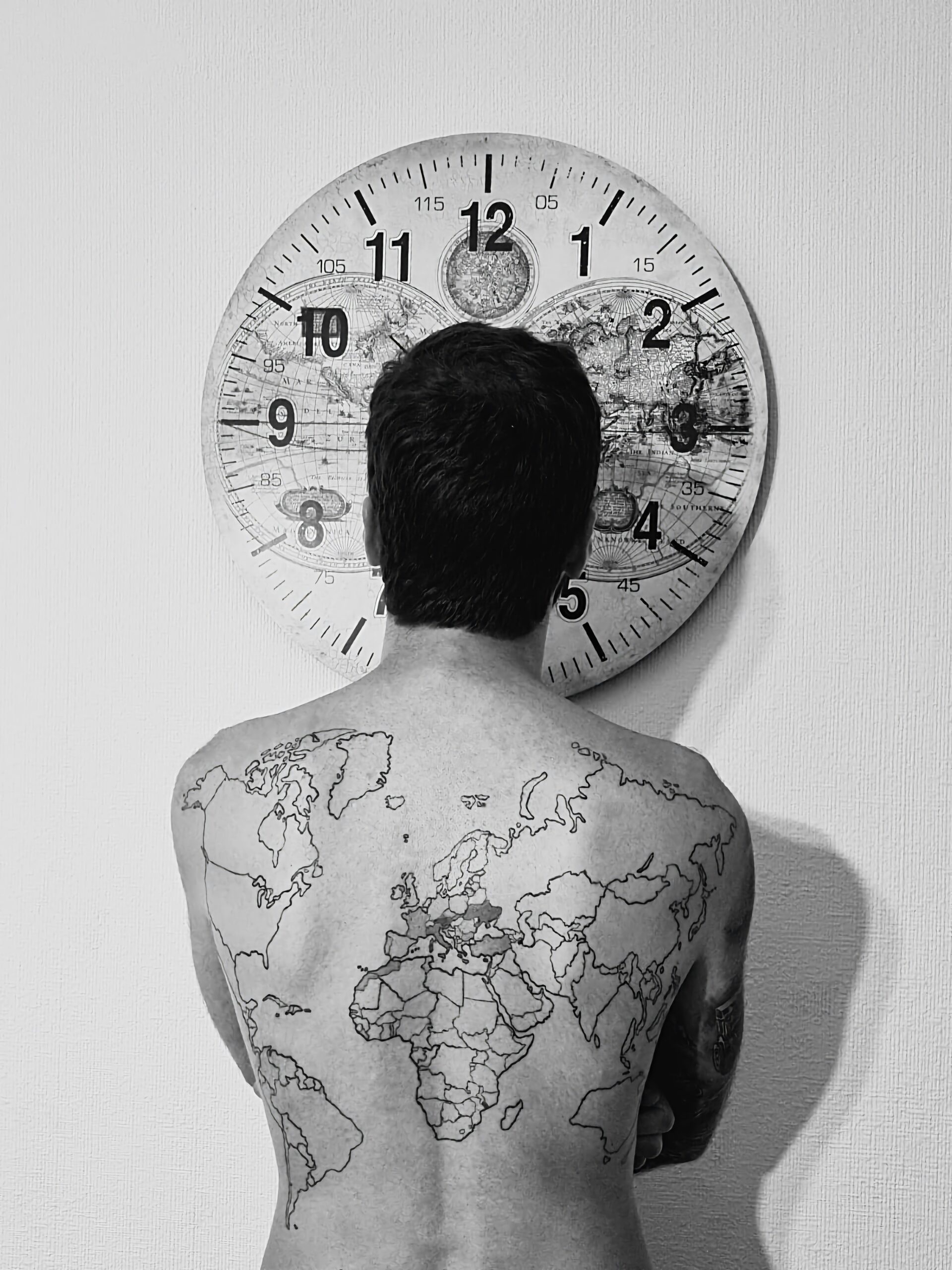
Why we’re exhausted—and what ancient cultures already knew
We wake to alarms. We schedule meetings in 30-minute blocks. We eat lunch at noon because that’s when lunch happens. We save for retirement in quarterly increments. We measure productivity in hours logged, emails sent, tasks completed.
We live by the clock.
And we’re tired.
Not just physically tired—though we are that too. We’re tired in a deeper way. A way that sleep doesn’t fix. A way that vacation doesn’t cure. A way that productivity hacks can’t solve.
We’re tired because we’re living against our nature.
The Clock vs. The Rhythm
The clock measures time in equal, relentless intervals.
Tick. Tick. Tick. Tick.
Every second identical. Every hour the same weight. Every day a grid to be filled.
The clock doesn’t care if you’re ready. It doesn’t care if the moment has arrived naturally. It doesn’t care about flow, or season, or ripeness.
The clock just is.
And we’ve organized our entire lives around it.
Rhythm, on the other hand, organizes time in patterns.
Not equal intervals—cycles.
Not rigid segments—phases.
Rhythm recognizes that:
- Mornings feel different than evenings
- Spring energy is not the same as winter energy
- Some days you wake ready to create; other days you need to rest and restore
- Some conversations need three hours; others need three minutes
- Hunger doesn’t arrive at 12:00 PM just because the clock says “lunch”
Rhythm is how the body experiences time.
The clock is how we’ve been taught to manage it.
And the gap between the two is killing us.
We Used to Live by Rhythm
Our ancestors didn’t schedule dinner for 6 PM.
They ate when the day’s work was done. When the sun had set. When the family had gathered. When the food was ready.
Dinner wasn’t an appointment.
It was an arrival.
They didn’t exercise from 7:00–7:30 AM.
They moved throughout the day—planting, building, walking, dancing—because movement was woven into the rhythm of living.
They didn’t have “work-life balance.”
They had cycles: seasons of intense labor, seasons of rest, seasons of celebration.
They didn’t impose a grid on time.
They moved with it.
Cultures That Remember
Some cultures never forgot.
Mediterranean cultures still close shops in the afternoon. Not because they’re lazy—because the body needs rest in the heat of the day. Dinner happens at 9 PM, when the evening has cooled and conversation can unfold without the clock cutting it short.
French culture protects the long meal. Not as indulgence, but as necessity. The meal is not fuel. The meal is connection, rhythm, presence.
Indigenous cultures around the world organize time around moon phases, seasonal cycles, and ceremonial rhythms. They don’t ask “What time is it?” They ask “What season are we in? What phase? What is ripe?”
These cultures aren’t rejecting modernity.
They’re protecting rhythm.
And research shows: they’re happier.
Why We’re Exhausted
We’ve been told the problem is time management.
“If you’re overwhelmed, you need better systems. You need to batch your tasks. You need to time-block. You need a morning routine.”
But the problem isn’t that we’re managing time poorly.
The problem is that we’re trying to live a rhythmic life inside a clock-based structure.
And it doesn’t fit.
Here’s what happens when we live clock-first:
We eat when the clock says eat—not when we’re hungry.
Result: We lose connection to our body’s signals.
We work in rigid 8-hour blocks—regardless of energy, season, or creative flow.
Result: We burn out, then blame ourselves for “lacking discipline.”
We force productivity during low-energy phases—mornings when we need stillness, winters when we need rest.
Result: We get less done and feel worse doing it.
We measure progress in hours and output—not in depth, meaning, or growth.
Result: We stay busy but feel empty.
We schedule connection—”Let’s have coffee next Tuesday at 2 PM.”
Result: Relationships feel transactional. Conversations feel rushed.
The clock creates compound problems.
One meeting creates the need for another. One email spawns three replies. One to-do list item generates five more. The clock doesn’t rest—so neither do we.
What a Rhythm-Based Life Looks Like
Living by rhythm doesn’t mean rejecting calendars or ignoring deadlines.
It means organizing life in patterns, not grids.
1. Organize by Phases (Not Hours)
Like the moon.
New Moon Phase (Low Energy, Inward):
This is when you plan, reflect, rest, dream. Not when you launch the big project.
Waxing Phase (Building Energy):
This is when you start, create, build momentum.
Full Moon Phase (Peak Energy, Outward):
This is when you share, perform, collaborate, celebrate.
Waning Phase (Harvest, Release):
This is when you complete, evaluate, let go, prepare for rest.
Your body already moves through these phases—daily, monthly, seasonally.
Rhythm-based living means working with them, not against them.
2. Organize by Cycles (Not Dates)
Like the seasons.
Spring = Planting
Time to begin. To experiment. To take risks.
Summer = Growing
Time to work hard. To show up fully. To expand.
Fall = Harvesting
Time to complete. To consolidate. To gather what you’ve built.
Winter = Resting
Time to restore. To reflect. To let the ground lie fallow.
We’ve been taught that every season should be summer—that rest is laziness, that slowing down is failure.
But winter is not a mistake.
Winter is preparation.
Cultures that honor this rhythm don’t burn out.
They sustain.
3. Organize by Natural Transitions (Not Arbitrary Appointments)
Like the arc of the day.
Morning = Rising Energy
Best for focus, creation, hard thinking.
Midday = Peak Energy
Best for interaction, collaboration, execution.
Afternoon = Descending Energy
Best for integration, admin, lighter tasks.
Evening = Restorative Energy
Best for connection, reflection, rest.
When you honor these transitions, you stop fighting your body.
You stop trying to force deep work at 3 PM when your nervous system is already winding down.
You stop scheduling important conversations at 8 AM when you haven’t fully arrived yet.
You move with the day, not against it.
Rhythm Doesn’t Mean No Structure
Some people hear “rhythm-based life” and think it means chaos. No plans. No commitments. Just drifting.
That’s not rhythm.
Rhythm is structure—but organic structure.
Think of music.
Music has rhythm. It has timing. It has structure.
But the structure comes from the pattern itself—not from an external grid imposed on it.
A waltz is structured.
But the structure emerges from the 1-2-3, 1-2-3 pulse—not from the clock.
When you live by rhythm, you still have commitments. You still show up. You still honor agreements.
But the structure supports the flow, instead of strangling it.
How to Return to Rhythm
You don’t need to move to the Mediterranean or reject modern life.
You just need to recognize rhythm and give it space.
Start Small:
1. Notice your natural energy cycles.
When do you feel most awake?
When do you need to rest?
When does creativity arrive?
When does your body want to move?
Don’t fight this. Design your day around it.
2. Group tasks by type, not by time.
Instead of:
“9 AM: Email, 10 AM: Meeting, 11 AM: Writing, 12 PM: Lunch”
Try:
“Morning: Deep work (writing, strategy, creation)
Afternoon: Connection (meetings, calls, collaboration)
Evening: Restoration (review, reflection, rest)”
Let the rhythm of the work dictate the structure.
3. Honor transitions.
Don’t jump from task to task.
Pause. Breathe. Let the previous thing end before the next thing begins.
This is rhythm.
4. Protect unscheduled time.
Not every hour needs a label.
Some of the most important things—insight, creativity, connection, rest—happen in the spaces between.
If your calendar is packed wall-to-wall, rhythm can’t breathe.
5. Celebrate when things are complete.
Clock-based life says: “Task done. Next task.”
Rhythm-based life says: “This chapter is complete. Let’s mark it. Let’s honor the transition.“
This is why some cultures have long dinners, festivals, ceremonies.
Not as indulgence.
As rhythm.
Why This Matters
We’ve been told the problem is us.
We’re not disciplined enough. Not organized enough. Not efficient enough.
But we’re not broken.
We’re just trying to live a human life inside a machine’s schedule.
And it’s not working.
Rhythm doesn’t make you less productive.
Rhythm makes productivity sustainable.
Rhythm doesn’t mean you get less done.
Rhythm means you stop burning out trying.
Rhythm doesn’t reject structure.
Rhythm creates structure that fits the shape of human life.
The World Runs on Clocks. Humans Run on Rhythm.
You already know this.
You’ve felt it when you’ve tried to force creativity at the wrong time of day.
You’ve felt it when you’ve scheduled back-to-back meetings and arrived at the end feeling drained, not accomplished.
You’ve felt it when you’ve eaten lunch at noon even though you weren’t hungry—and been starving at 3 PM.
You’ve felt it when you’ve tried to maintain the same energy in January that you had in July—and wondered why everything felt harder.
That’s not failure.
That’s rhythm trying to speak.
The clock will always be here.
Meetings will still exist. Deadlines will still matter. Bills will still need to be paid.
But you don’t have to organize your entire life around the grid.
You can live with the clock when you need to—
and return to rhythm when you don’t.
Because rhythm is not a luxury.
Rhythm is how we stay human.
Where to Begin
This week, try one thing:
Let one meal happen when it’s ready—not when the clock says it’s time.
Eat when you’re hungry.
Finish the conversation.
Let the evening unfold.
Notice how it feels.
That’s rhythm.
And once you feel it, you won’t want to go back.
Robert Tang & Beverley Cayton-Tang teach Rhythm First learning—in dance, movement, and life. Learn more at robertbeverley.com and dancescape.com.