
It sounds counterintuitive.
If you want personal attention, wouldn’t private lessons be the fastest way to improve?
Sometimes, yes.
But when it comes to confidence, coordination, and feeling at ease in your body, group learning often works faster—and more naturally.
Not because it’s cheaper.
Not because it’s easier.
But because rhythm is social by nature.
Confidence Is Not a Solo Skill
Most people think confidence comes from mastery.
Once I know what I’m doing, I’ll feel confident.
But confidence doesn’t actually work that way.
Confidence emerges when the nervous system feels safe, oriented, and connected.
It grows through shared rhythm, not isolated performance.
That’s why people can be technically competent and still feel unsure—especially when learning alone.
What Groups Do That Private Lessons Can’t
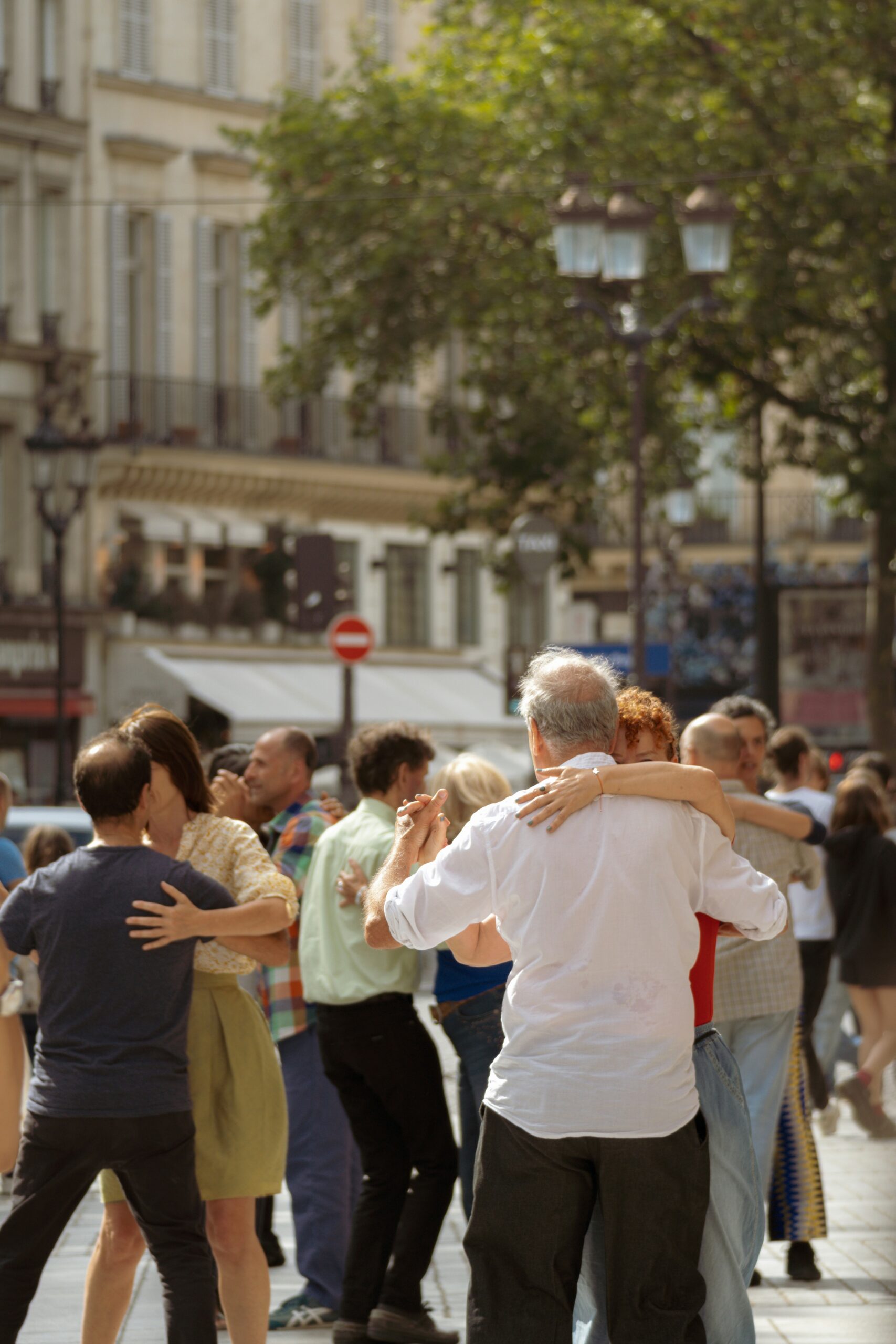
In a well-held group, something subtle but powerful happens.
You’re no longer the center of attention.
You’re part of a shared pulse.
Breathing synchronizes.
Movement organizes itself.
Mistakes stop feeling personal.
You realize you’re not behind.
You’re not late.
You’re not the only one figuring it out.
That realization alone restores confidence faster than correction ever could.
Rhythm Stabilizes Through Others
Rhythm is inherently relational.
We entrain to one another—through sound, movement, timing, and presence.
It’s how humans have learned together for thousands of years.
In group dance:
- You feel rhythm externally and internally at the same time
- Coordination stabilizes without conscious effort
- Learning becomes participatory instead of performative
People often say:
“I don’t know why, but it suddenly feels easier.”
That’s rhythm doing what it does best.
Why Private Lessons Can Sometimes Slow Confidence
Private lessons can be wonderful—especially for refinement, depth, or specific goals.
But for beginners, they can unintentionally increase pressure.
The spotlight is constant.
Feedback is immediate.
Self-awareness intensifies.
For some, this accelerates learning.
For many, it delays confidence.
They start monitoring instead of moving.
Correcting instead of feeling.
Trying instead of trusting.
Without shared rhythm, coordination has to be manufactured.
That’s hard work.
The Sweet Spot: Group First, Then Depth
Over decades of teaching, we’ve noticed a pattern.
People who begin in small, well-paced groups often:
- progress more smoothly
- feel confident sooner
- stay engaged longer
Once rhythm is stable, private or semi-private work becomes far more effective.
Not because the teaching changes—
but because the foundation is already there.
Why Size Matters
Not all groups are equal.
When groups are too large, connection thins.
When they’re too small, pressure returns.
We’ve found that moderate-sized groups create the best conditions:
- enough people to generate shared rhythm
- enough attention to feel supported
- enough space to move without scrutiny
It’s not about being watched.
It’s about moving together.
Dance Was Always Meant to Be Social
Dance didn’t originate as instruction.
It emerged as community.
People moved together to mark time, celebrate, grieve, connect, and belong.
Technique came later.
When dance returns to its social roots, confidence stops being something you earn—and becomes something you experience.
Begin Where You Are
If confidence feels elusive, you don’t need more pressure.
You may need:
- shared rhythm
- a supportive group
- space to move without judgment
Confidence grows fastest when you’re not trying to prove anything.
Group dance doesn’t just teach movement.
It reminds you how to belong in motion.
If you’d like to experience Rhythm First in a group setting, you may want to explore:
→ danceScape — where Rhythm First comes to life through movement and community
→ Begin Where You Are